The Spirit of Children’s Day: How Art Captures Japan’s Kodomo no Hi

Celebrated annually on May 5th, Kodomo no Hi (Children’s Day) marks the final celebration of the Golden Week holiday season in Japan. While the day is dedicated to respecting children’s personalities and celebrating their happiness, it is a holiday steeped in centuries of artistic tradition.
Through vibrant colors and symbolic imagery, art plays a central role in how families express their hopes for the next generation.
The Sky as a Canvas: Koinobori
The most iconic visual associated with Children’s Day is the Koinobori, or carp streamer. These wind-socks are more than just outdoor decor; they are kinetic sculptures.
The Symbolism: Legend tells of a carp that swam upstream to become a dragon. In Japanese art, the carp represents courage, strength, and the ability to overcome obstacles.
The Artistic Display: Typically, a large black carp (Magoi) represents the father, a red carp (Higoi) represents the mother, and subsequent smaller blue or green carp represent the children. When caught in a spring breeze, they mimic the movement of fish swimming against a powerful current.

Miniature Masterpieces: Gogatsu Ningyo
Inside the home, the focus shifts from the sky to the Tokonoma (alcove), where families display traditional May Dolls, known as Gogatsu Ningyo.
The Samurai Spirit: These displays often feature miniature samurai armor (yoroi) and helmets (kabuto). The craftsmanship involved in these miniatures is extraordinary, utilizing traditional lacquering, metalwork, and silk braiding.

Kintaro: Many displays feature a doll of Kintaro, a folklore figure known for his superhuman strength and bravery. In art, he is often depicted wrestling a giant carp, serving as a heroic role model for children.
Culinary Art: Kashiwa-mochi and Chimaki
Artistry even extends to the seasonal treats served on this day.
1. Kashiwa-mochi: Rice cakes filled with sweet bean paste and wrapped in oak leaves. Since oak trees do not shed their old leaves until new buds appear, the leaf symbolizes the prosperity of descendants and the continuity of the family line.
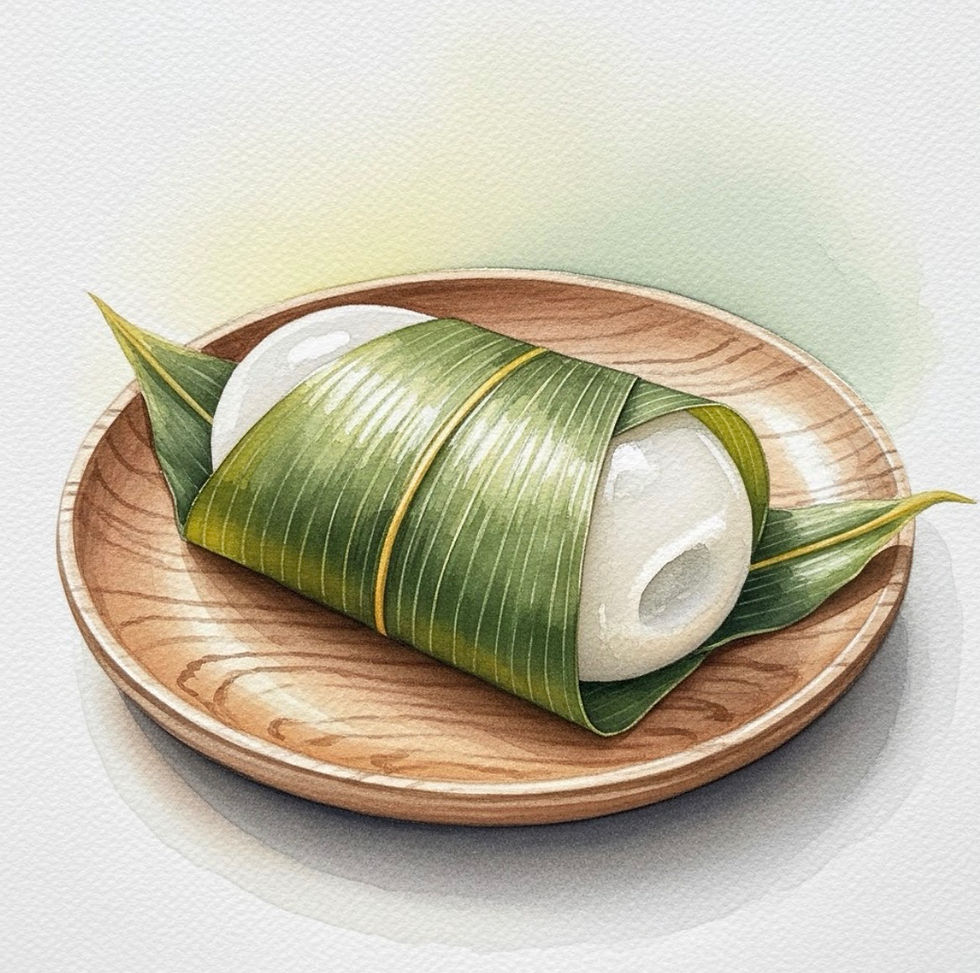
2. Chimaki: Sweet sticky rice wrapped in bamboo leaves and tied with twine. The geometric precision of the wrapping is an art form in itself, rooted in ancient traditions intended to ward off bad luck.
Modern Interpretations
Today, the art of Children’s Day continues to evolve. From school children creating origami helmets to contemporary artists reimagining the Koinobori with modern patterns and neon colors, the holiday remains a vibrant intersection of ancient folklore and modern creativity.
At its heart, the art of Kodomo no Hi is a visual prayer—a colorful, creative wish for every child to grow up strong, healthy, and resilient.